

Sobatomo is an AI-powered elderly companion developed by susuROBO株式会社. Between 2021 and 2026, the system evolved from a simple voice-only device into a multimodal AI capable of proactive greeting and gesture recognition.
It is designed for two primary contexts: elderly people living alone at home, and residents of care facilities such as day service centers and assisted living homes. In both settings, the goal is the same — reducing loneliness through accessible, emotionally warm AI companionship.
This case study traces the product's evolution across five years of real-world pilots and national exhibitions in Japan. The name Sobatomo was first introduced publicly at CareTex'26 in February 2026; it is used throughout this document to refer to the product at all stages of its development.
Voice-Only Companion
The project began as part of the AIDOR Acceleration Program in Osaka Prefecture — a roughly five-month program supporting early-stage technology ventures through mentorship and structured development.
The first prototype was a voice messaging lamp-shaped device, designed to blend naturally into a senior's home — screenless and minimal, with no technical prerequisites. It was conceived especially for elderly people living alone, where a discreet, always-available presence could provide conversational companionship without intruding on daily life.
The founding hypothesis: a screenless device could encourage communication with peers for users who are not comfortable with using smartphones
Living Lab — Takaishi City
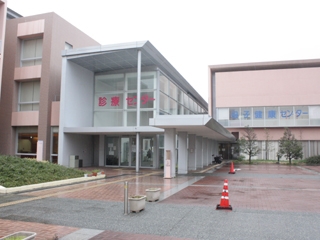
In 2022, the voice messaging device was tested through the Kenko Living Lab Project in Takaishi City, Osaka. The pilot evaluated usability among elderly residents, measured conversational engagement, and assessed emotional acceptance of communicating with peers via a voice messaging device.
Seniors were receptive and found the voice-only format of communicating with peers via a voice messaging device accessible and entertaining.
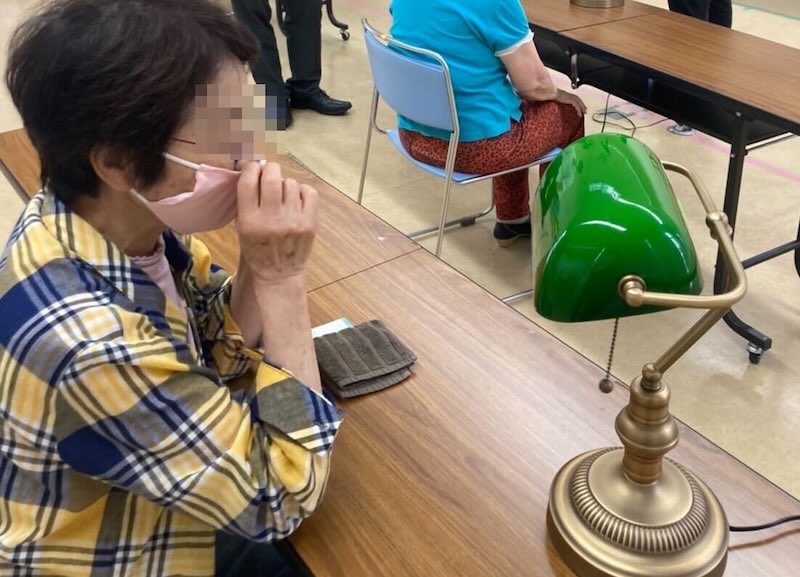
Resident voice
- "It was fun to talk to my friend through this device, since I don't use LINE."
Avatar-Based Companion — Suita City PoC
In 2024, the system evolved into an audio-enabled avatar companion, tested at Wellis Olive Senrioka (operated by NTT Urban Development) in Suita City, Osaka, as part of the Sakishima Tech Lab Program.
The physical lamp gave way to a tablet-based animated avatar — an expressive visual character with synchronized facial and body movements and voice. This time the functionality was not just chat but also utilities like booking a taxi or checking the menu at the cafetaria.
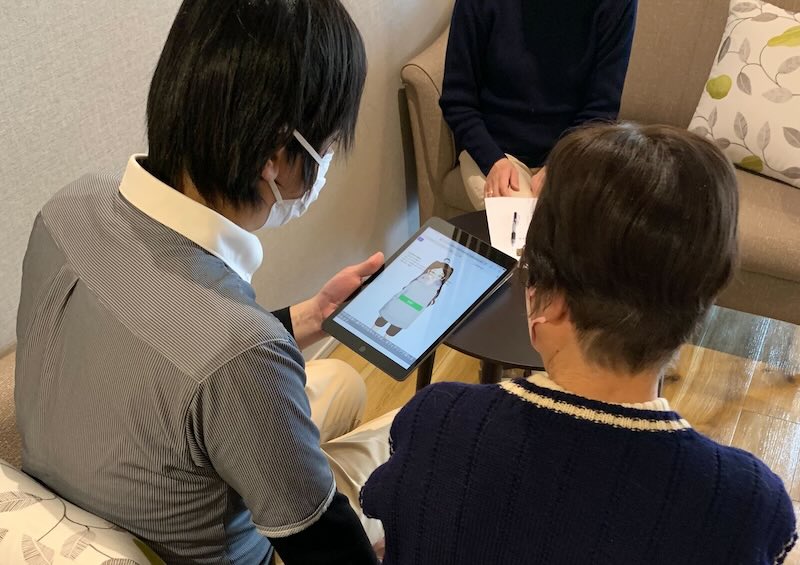
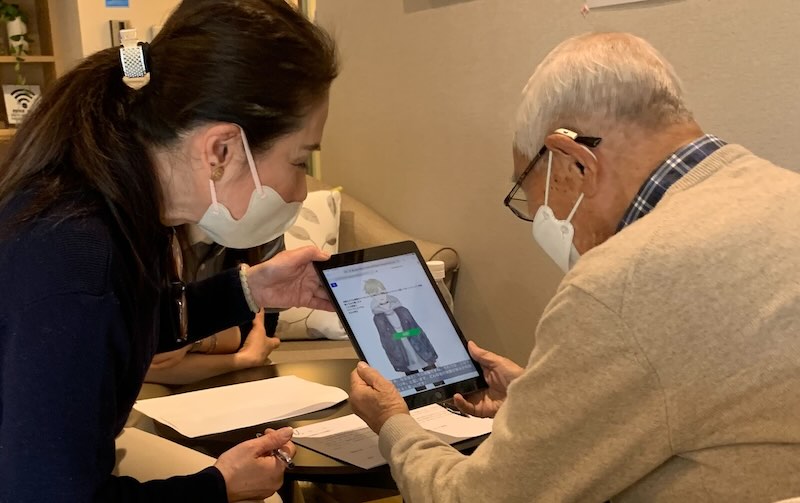
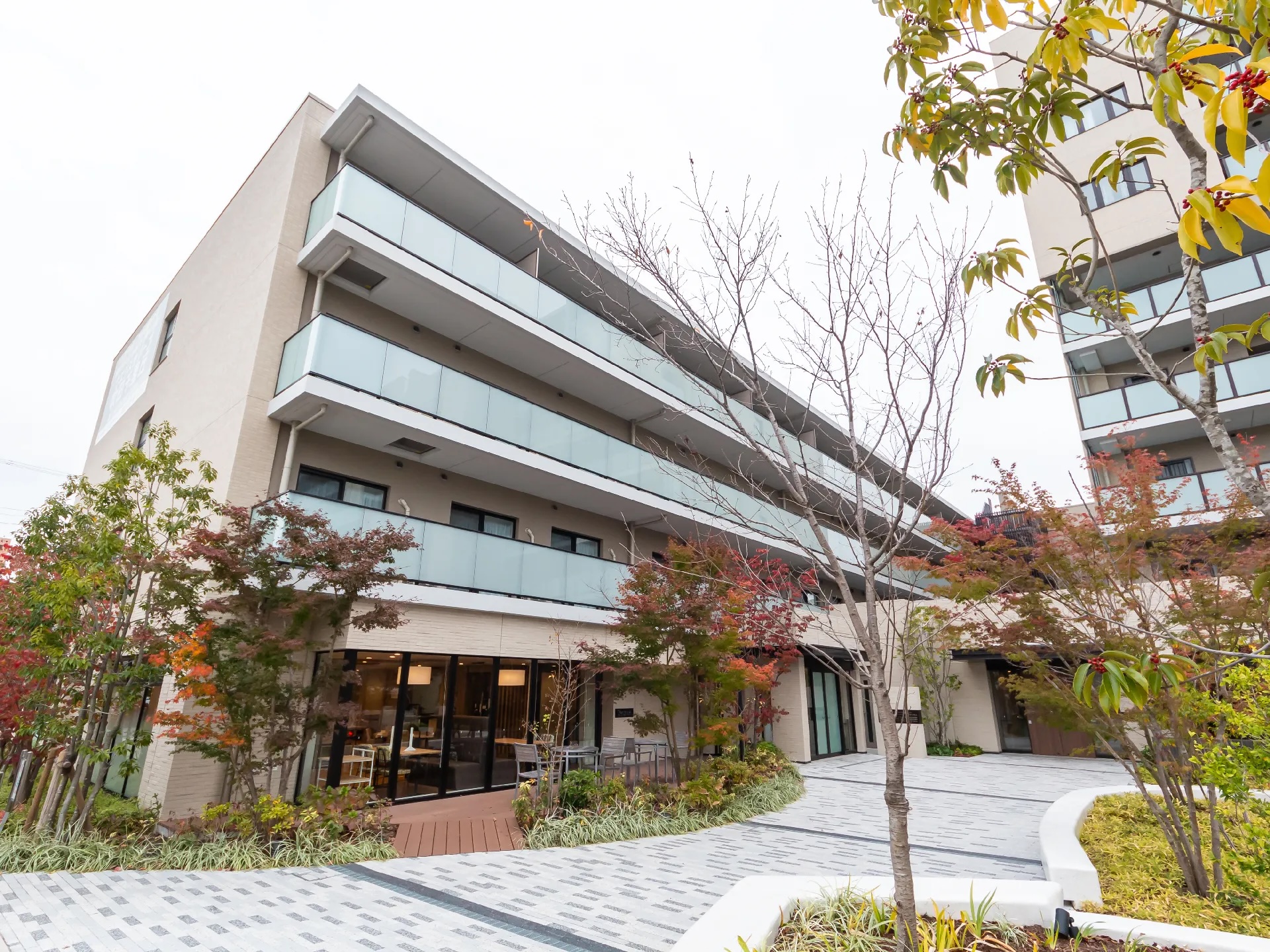
Resident voices
- "It's too cute, makes me shy."
- "I would like to use this instead of the app."
Facility staff noted that the avatar format encouraged spontaneous interaction and could support residents during busy periods — validating the shift from disembodied voice to embodied AI presence.
CareTex'25 — Tokyo
The AI companion was exhibited at CareTex'25 in Tokyo, one of Japan's largest elderly care technology exhibitions. Extended conversations with care facility operators revealed a consistent pattern: strong interest in AI companionship, acute concern about staffing shortages, and an unmet need for AI that initiates — rather than merely responds to — interaction.
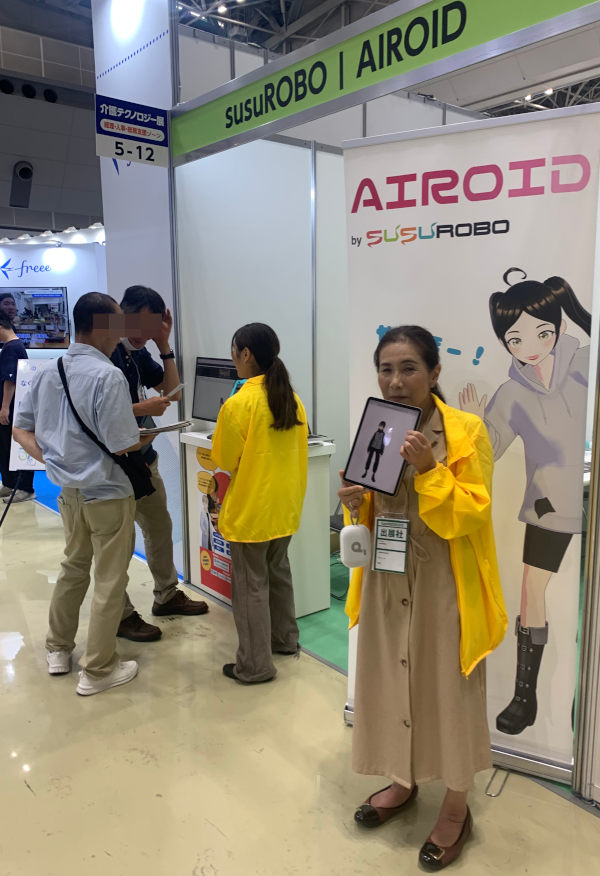
Staff voice
- "We would love to see our residents smile more."
Day Service PoC — Gunma
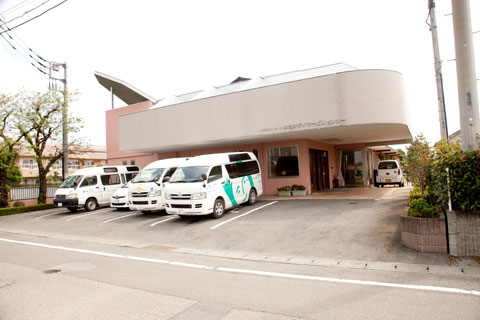
In 2025, the system was deployed at Yutaka Day Service Center, operated by Social Welfare Corporation Uetakekai in Isesaki City, Gunma. Day-service centers differ significantly from residential homes: they are louder, busier, with group-based activities and staff who are constantly multitasking.
The AI companion filled a real gap during idle periods — providing conversational presence when staff were occupied and residents would otherwise sit in silence. The potential was clear. But so was the limitation: the system remained primarily reactive, waiting to be addressed rather than reaching out.
This gap shaped the next development phase directly.
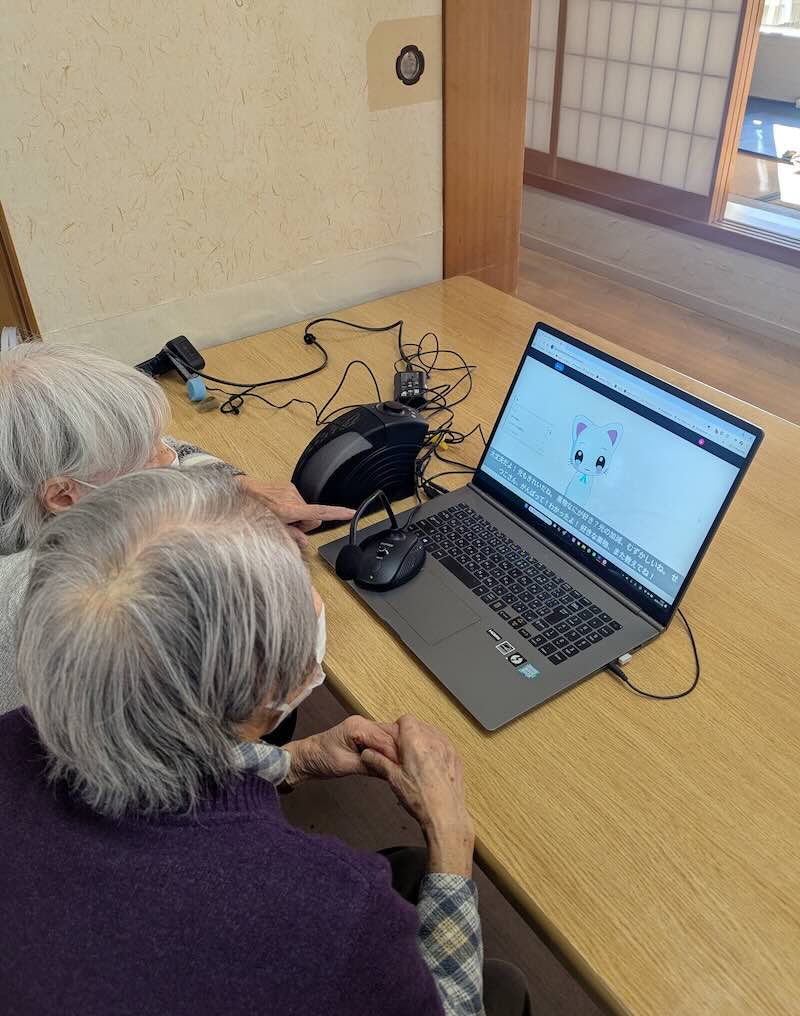
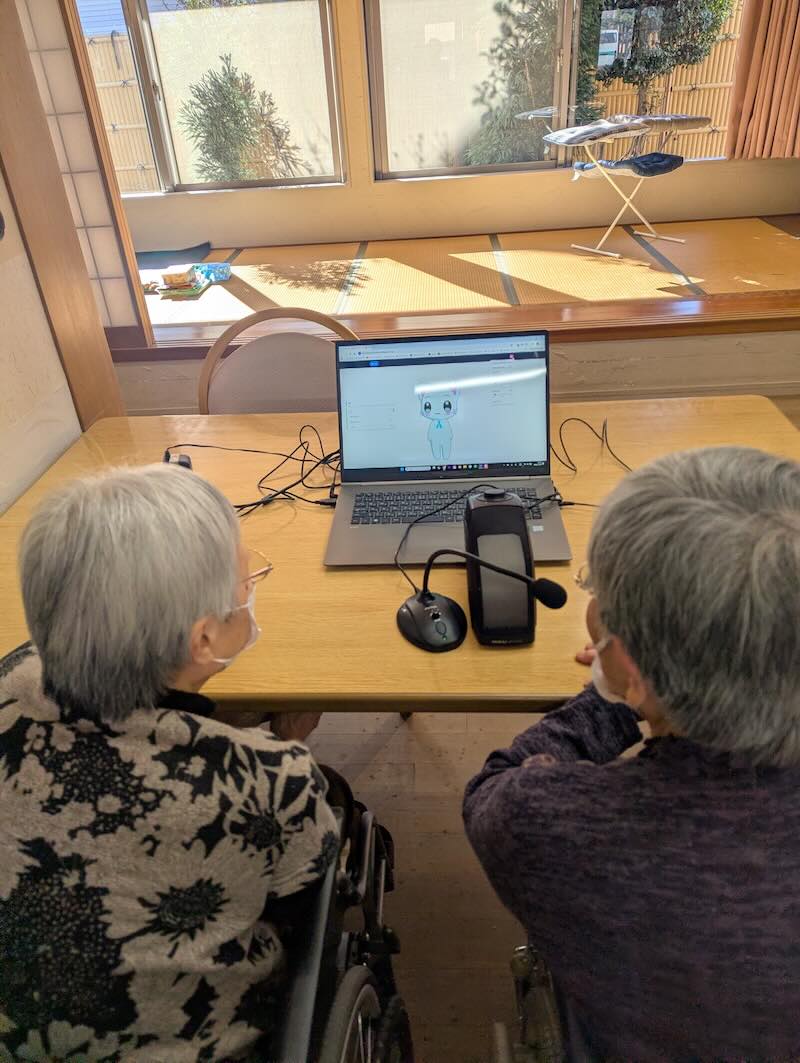
Staff voices
- "The atmosphere of the facility has beecome more lively as the residents become chatty with the avatar and each other."
- "Interacting with the avatar softened the user's facial expressions, as users smiles and nodded in agreement."
- "It seems like it could also be useful as a conversation partner for staff themselves (for consultations, venting, or chatting during nighttime overtime, etc.)"
CareTex'26 — New Name & Multimodal Capability
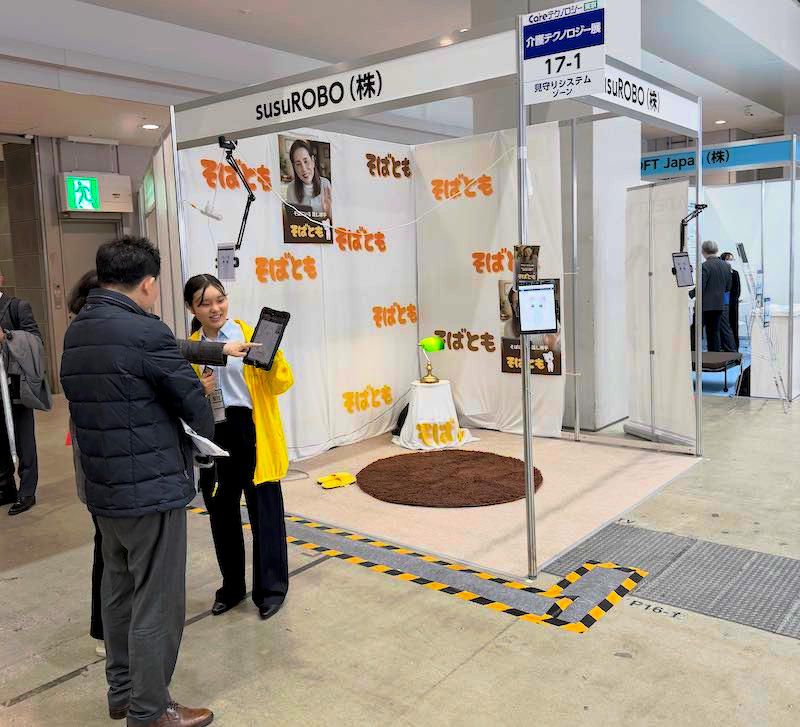
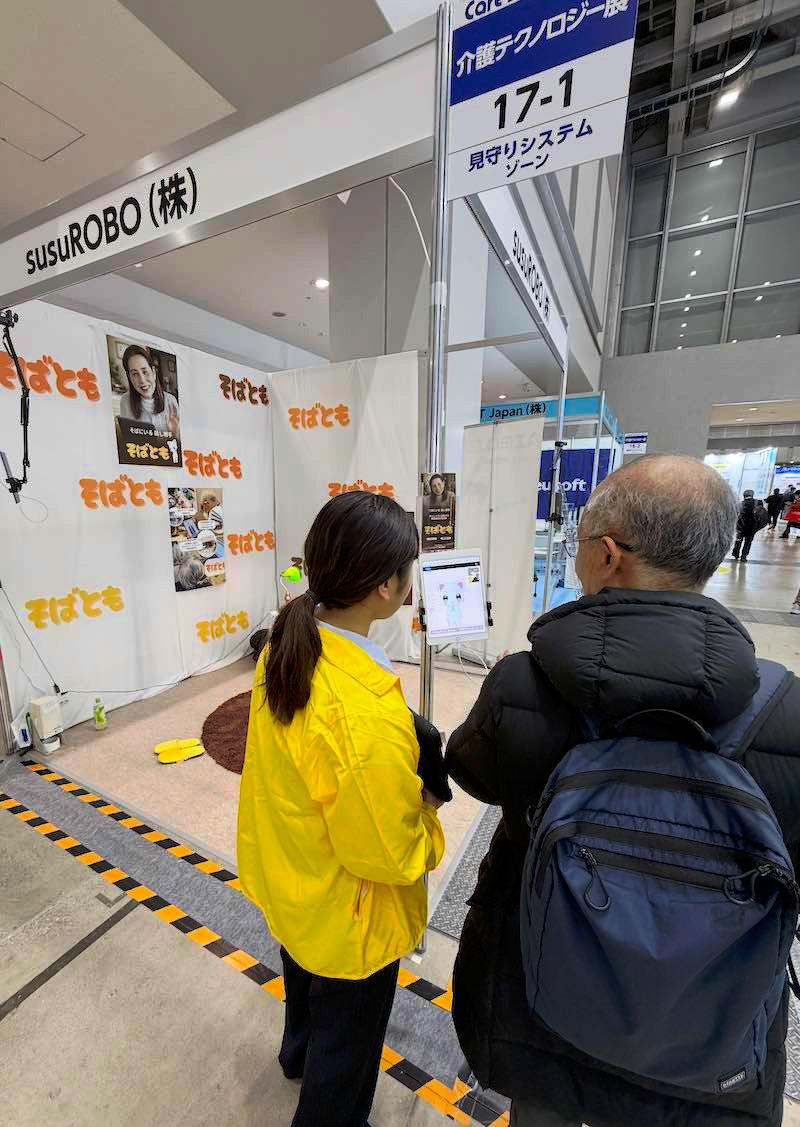
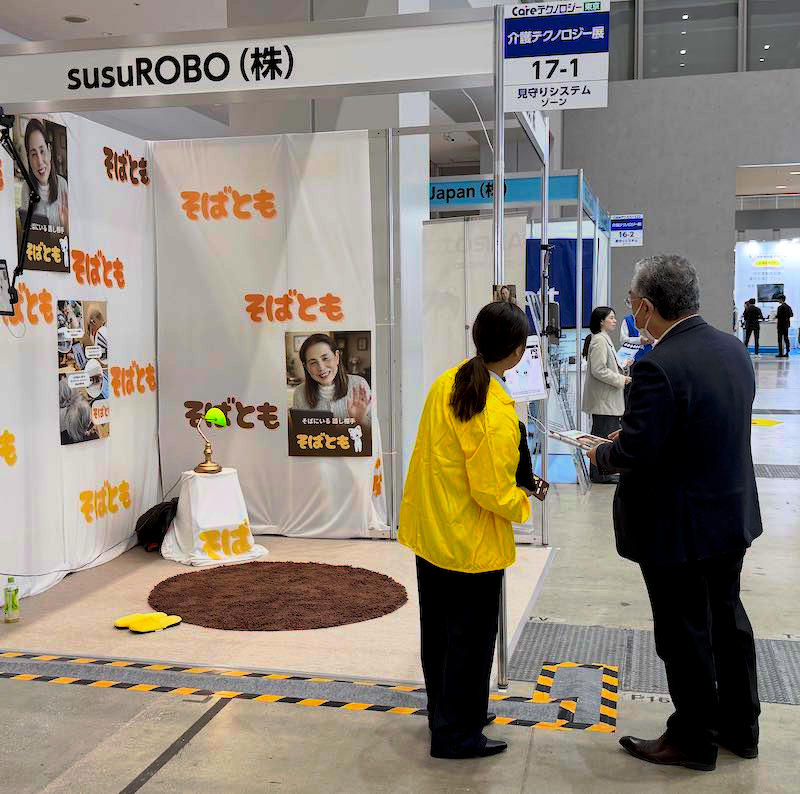
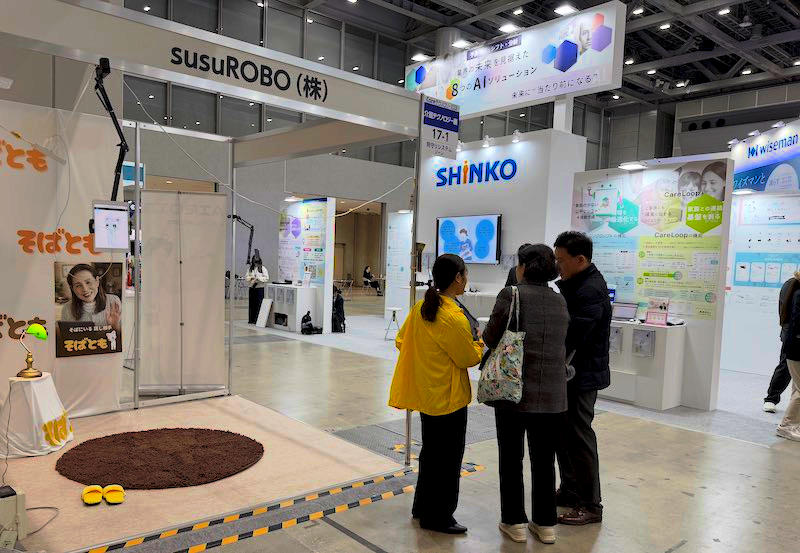
At CareTex'26 in Tokyo — February 2026 — the product was publicly named Sobatomo for the first time. The name itself captures the intent: そば (soba, "beside") and とも (tomo, "friend") — a companion that stays close.
The naming coincided with the introduction of the most advanced iteration yet: a Multimodal Social AI that integrates voice, video, and gesture recognition into a single coherent presence. For the first time, the system could perceive the world around it and act without being asked.
Sobatomo now detects when someone approaches, initiates a greeting automatically, recognizes waving and basic gestures, maintains conversational continuity, and operates robustly in noisy environments. The transformation — from reactive tool to socially aware companion — drew sustained attention from care professionals on the exhibition floor.
Evolution Timeline
| Year | Format |
|---|---|
| 2021 | AIDOR accelerator |
| 2022 | Kenko Living Lab test |
| 2024 | Residential facility PoC |
| 2025 | CareTex'25 |
| 2025 | Day-service PoC |
| 2026 | CareTex'26 |
Design Philosophy
Low Friction
Simple setup, familiar hardware, natural speech. Sobatomo is designed for senior users who may never have interacted with AI — no apps, no accounts, no learning curve.
Emotional Warmth
Designed for comfort and companionship rather than productivity. Each design decision — from the avatar's expressions to the tone of its speech — is optimized for emotional resonance rather than efficiency.
Care Support, Not Replacement
Sobatomo augments caregivers rather than replacing them. It fills the quiet moments — the gaps between human interactions — without competing with or diminishing the human care around it.
Strategic Positioning
Sobatomo differs from general-purpose voice assistants and static service robots by combining presence detection, proactive greeting, gesture recognition, and conversational continuity in a single system purpose-built for care environments.
It is designed specifically for Japan's aging society — for the home of an elderly person living alone, and for the operational realities of care facilities where staff shortages, ambient noise, and group dynamics demand an AI that is robust, proactive, and emotionally attuned.
Conclusion
From a voice-only lamp prototype in Osaka in 2021 to a multimodal, socially aware AI system in 2026, Sobatomo represents a five-year iterative journey grounded in real-world deployments.
Its evolution reflects continuous learning from living lab validation, residential facility and day-service testing, and the elderly care industry exhibition feedback — each phase informing the next.
Sobatomo continues to refine how AI can reduce loneliness and support elderly care through emotionally intelligent, socially aware interaction.